PathPath
  • About Us
  • Contact Streetsblog SF
  • Our Funders
  • Comment Moderation Policy
  • Streetsblog San Francisco Editorial Independence Policy
  • Donor Transparency Policy
    Follow Us:
  • Facebook
  • Twitter
Streetsblog Logo
    • HOME
    • USA
    • NYC
    • MASS
    • LA
    • CHI
    • SF
    • CAL
    • STREETFILMS
    • DONATE
Streetsblog SF Logo
  • Pedestrian Safety
  • Bicycling
  • Muni
  • Parking
  • Peninsula
  • California
    Follow Us:
  • Facebook
  • Twitter

David Meyer

Recent Posts
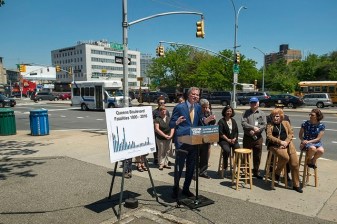
Mayor Won’t Say The Words ‘Bike Lane’

By David Meyer | Apr 2, 2019 | No Comments
He won’t say the words “bike lane.” Mayor de Blasio declined to commit to installing a protected bike lane — which is his own administration’s plan— as part of the long-delayed final phase of the Queens Boulevard safety redesign. Under questioning from Streetsblog on Thursday, de Blasio apparently felt he could not even utter the […]
NYC Could be First in Nation to Pass Congestion Pricing

By David Meyer | Mar 26, 2019 | No Comments
NY State Assembly has the votes to pass congestion pricing. The details, however, are still being worked out.
Image: Skip

What Does It Mean for Bike Advocacy When Big Business Hires the Advocates?

By David Meyer | Oct 17, 2018 | No Comments
It's either game-changing...or greenwashing.
Car Ownership Rising in NYC

By David Meyer | Oct 3, 2018 | No Comments
It's a great city to be carless in, and yet...
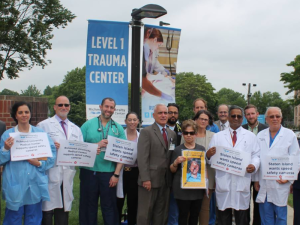
Trauma Doctors on Automated Speed Enforcement

By David Meyer | Jun 14, 2018 | No Comments
Thoughts on Automated Speed Enforcement from the East Coast
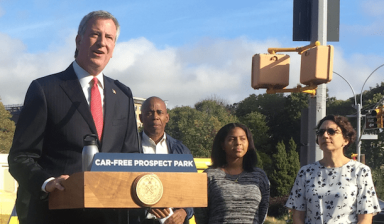
New York Shows the Way Again: Prospect Park Goes Car-Free Forever on January 2

By David Meyer | Oct 23, 2017 | No Comments
As of January 2, no part of Prospect Park will ever be a traffic shortcut again, Mayor de Blasio announced this morning. Sustained activism for a car-free Prospect Park had already prompted the city to cut the hours when through traffic is allowed down to weekdays from 7 to 9 a.m., and only on the park's east side. With today's announcement, the entire park will be free of private cars at all times. "The park was not built with cars in mind. They didn't exist. The park was built for people," the mayor said at the Grand Army Plaza entrance. "This is getting back to the original idea of this park, restoring it to its original purpose." The west side of the Prospect Park loop has been off-limits to motor vehicle through traffic since 2015. Over the summer, DOT and the Park Department conducted an eight-week car-free pilot to evaluate the impact on traffic on surrounding streets.
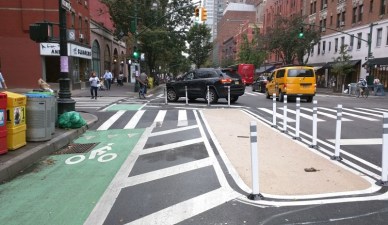
New York Tests Out New Intersection Design for Protected Bike Lanes

By David Meyer | Oct 12, 2017 | No Comments
Intersections with mixing zones have a higher rate of cyclist injuries. New York is trying the Dutch approach.
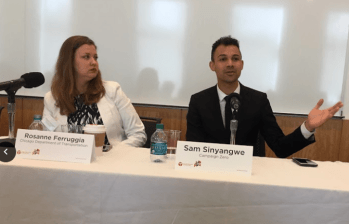
Police brutality and racial inequities in criminal justice must be addressed by advocates and agencies aiming to reduce traffic fatalities. That's the key takeaway from a Vision Zero Cities panel yesterday on police violence and traffic enforcement.

Just last Saturday, 15-year-old Jordan Edwards sat in the front passenger seat of a car, leaving a house party in Balch Springs, Texas, when a police officer shot through the windows and killed him. Initial police reports said the officer fired his rifle because the driver was backing toward him "in an aggressive manner." Video evidence later proved that account to be false.

Edwards wasn't killed in a "traffic stop," per se, but his friend's driving behavior was used to justify his murder. He lost his life, as have too many people of color, because a police officer inexplicably responded to a harmless situation with lethal force. And that should concern everyone whose work touches on traffic enforcement.

"Vision Zero cannot be a reason to overly-police black and brown bodies," said Los Angeles County Bicycle Coalition Executive Director Tamika Butler. "You can’t ignore the country we live in, you can’t ignore the things that are happening, and you can’t ignore the impacts that occur for folks when they are policed."
In a keynote later in the day, Butler said street safety advocacy "can't lead with enforcement" given the way racism and police brutality are embedded in law enforcement. "I get pulled over all the fucking time for not doing anything but being black... It's not true that if you're not doing anything wrong, you won't get stopped."
Overall, about 11 percent of police killings -- around 100 people each year -- occur following a traffic-related stop, according to Sam Sinyangwe, an analyst at Campaign Zero, which maintains the most extensive database of police killings in the country. A hugely disproportionate share of those victims are black.

"It can’t be that police are the only thing that we’re thinking about when we say enforcement," said Sinyangwe. "We have to think about what are alternative ways of enforcing traffic violations that don’t involve a police officer -- an armed police officer -- encountering a scared civilian.”

Also on the panel were Chicago DOT Vision Zero Coordinator Rosanne Ferruggia and Captain Mike Crebs from the Portland Police Bureau Traffic Division, who offered insights into how their cities are attempting to uphold traffic safety without reproducing systemic biases in the criminal justice system.
Here in New York City, summonses and citations are often the only metric police officials mention when discussing NYPD's role in Vision Zero. Police do not provide data that shows the effect of enforcement activity on crash rates. NYPD doesn't even release geographic data on summonsing activity. There is no breakdown of traffic stops by race.
In Portland, said Crebs, the police department disaggregates enforcement data by race, as well as whether traffic stops involved a search or revealed any illegal activity, which lets the public assess evidence of bias and unjustified stops.

Automated enforcement is one way to limit interactions with police, but the financial penalties can still impose a disproportionate burden on poor people without posing much of a deterrent for wealthy drivers. For that reason, Crebs said he'd like to make fines proportionate to income. "You take someone who’s on fixed income, charge them $100, their life has been incredibly changed for that," he said.

CDOT's Vision Zero action plan, meanwhile, intentionally excludes citations as a strategy or benchmark for success. Traffic fatalities and injuries are more heavily concentrated in poor neighborhoods and communities of color, but that cannot be used as "trojan horse" for police brutality, in Ferruggia's words. “We have very explicit expectations of what we want in policing, and it’s committing to education first," she said.

Ultimately, for Vision Zero to succeed, governments and advocates have to "ensure that communities are policed equitably," said Sinyangwe. "You can't talk about enforcement without having folks who that enforcement is going to impact shaping that strategy."

Addressing Racism and Police Brutality in Traffic Enforcement

By David Meyer | May 10, 2017 | No Comments
"Vision Zero cannot be a reason to overly police black and brown bodies," said Los Angeles County Bicycle Coalition Executive Director Tamika Butler.

New York Mayor Shows Leadership in Making Streets Safer for All Users

By David Meyer | Sep 29, 2016 | No Comments
Following unanimous City Council votes earlier this month, Mayor de Blasio signed several bills yesterday with important implications for walking and biking in NYC. Public Advocate Letitia James’ Intro 997-A, now known as Local Law 115, amends the legal definition of pedestrians’ right of way so anyone who steps off the curb during the flashing “Don’t Walk” phase has […]

Evidence That Split-Phase Signals Are Safer Than Mixing Zones for Bike Lanes

By David Meyer | Jan 26, 2016 | No Comments
When DOT presented plans for a protected bike lane on Sixth Avenue, one point of contention was the design of intersections. How many intersections will get split-phase signals, where cyclists and pedestrians crossing the street get a separate signal phase than turning drivers? And how many will get “mixing zones,” where pedestrians and cyclists negotiate the same space as turning […]
      • About Us
      • Contact Streetsblog SF
      • Our Funders
      • Comment Moderation Policy
      • Streetsblog San Francisco Editorial Independence Policy
      • Donor Transparency Policy
        Follow Us:
      • Facebook
      • Twitter
      Streetsblog SF Logo