Car-free in Montana
Some thoughts today from one of the newest members of the Streetsblog Network — from Missoula, Montana, Imagine No Cars.
The blog’s author is a University of Montana student who
is chronicling his year of living without a motor vehicle. He calls the
blog "a journal of my journey to live a car-free lifestyle. An
experiment to bike, walk, and bus it through the next year of my life.
What will not using a car mean?" (Check out his photostream on Flickr, too. Some nice stuff there.)
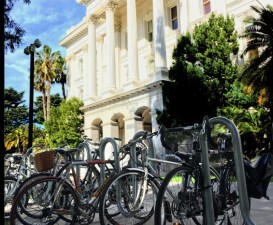
 Photo of Missoula, Montana, by Justin Brockie via Flickr.
Car-free
living isn’t all he’s writing about, though. In a recent post, he
takes a look at Missoula’s master-plan-in-the-making, and in
particular the contentious issue of "Additional Dwelling Units," or
"ADUs" — second residential units, like mother-in-law apartments or
rental apartments, added to existing residential properties:
Those opposed to ADUs claim they are worried
about the “character” of a neighborhood and the density that they may
bring with them. I may be wrong, but what I hear is that people don’t
want those with lower incomes mixing into their nice, high income
neighborhoods….The reality is that this is an issue of how
we, as a community, want to accommodate future growth. Missoula already
has a large problem when it comes to supplying affordable housing, so
do we want to continue to build large apartment complexes full of low
and middle income residents on the edge of town, like those built in
the last few years around North Reserve? This creates an additional
problem of forcing people who have less means to afford commuting to
have longer commutes.We have a choice to make. Do we want
development to occur on the edge of town, or do we want to concentrate
on infill? If we continue to grow outwards, large developers, retiring
farmers, and the construction industry win out big, but Missoula will
lose valuable farm land, open space, and wildlife habitat that helps to
make Missoula a great place to live, while taking more money from
taxpayers for infrastructure, increasing congestion, and pollution. If
we choose infill, we get to keep the overall character of Missoula,
keep the open spaces we love so much for recreation, and create a more
walkable community while giving homeowners the ability to invest in
their own property to provide a
better income and home for Missoula residents not lucky enough to
afford a home.
This blog is a great reminder of how
Streetsblog Network members around the country are thoughtfully
engaging the development process in all kinds of environments — urban,
suburban, rural, semi-rural. We now are following 262 blogs
from 43 different states, and there’s nothing homogeneous about them.
They’re each seeking smart solutions to transportation and planning
problems on a local level. It’s a pleasure to watch.